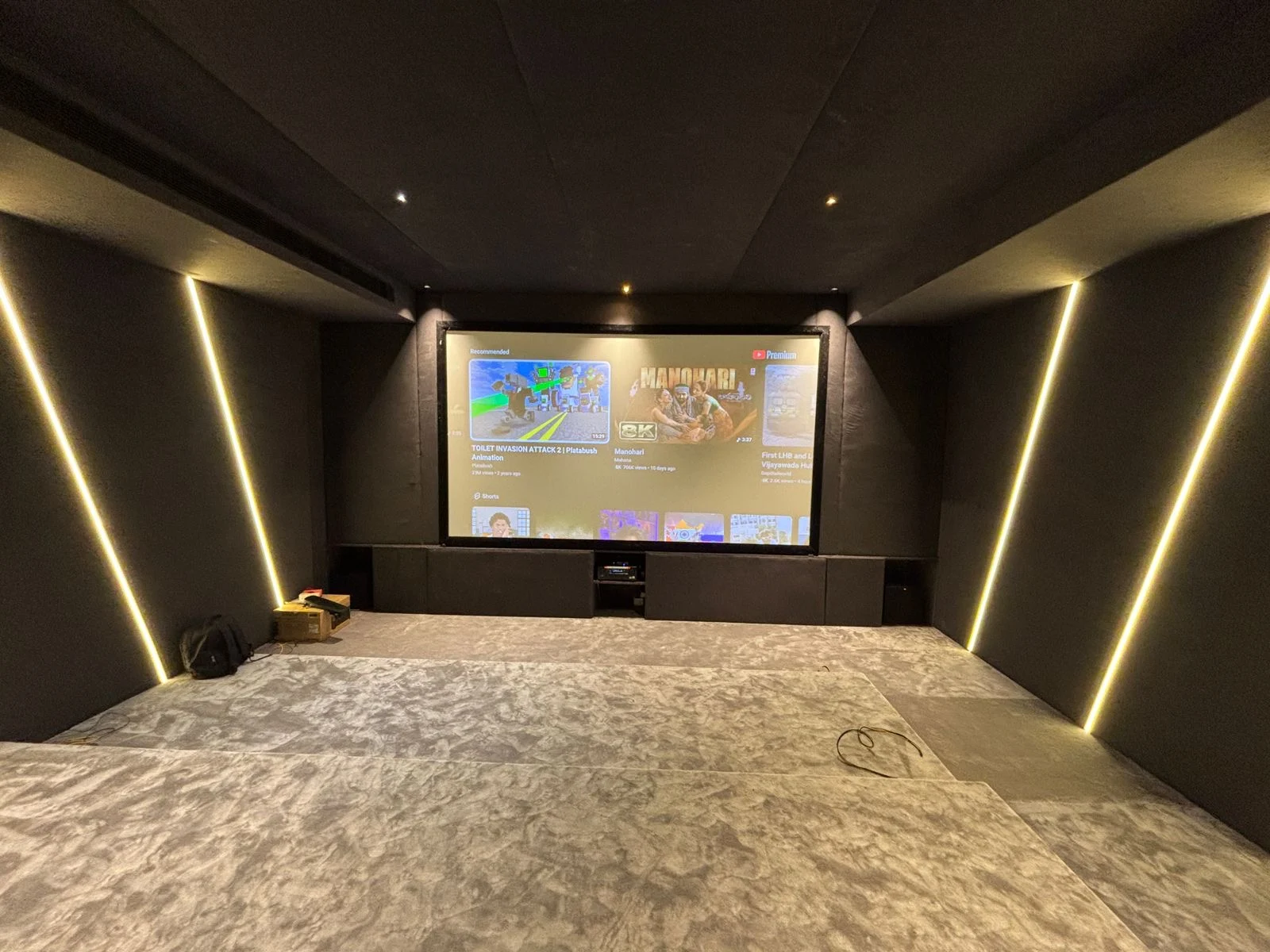
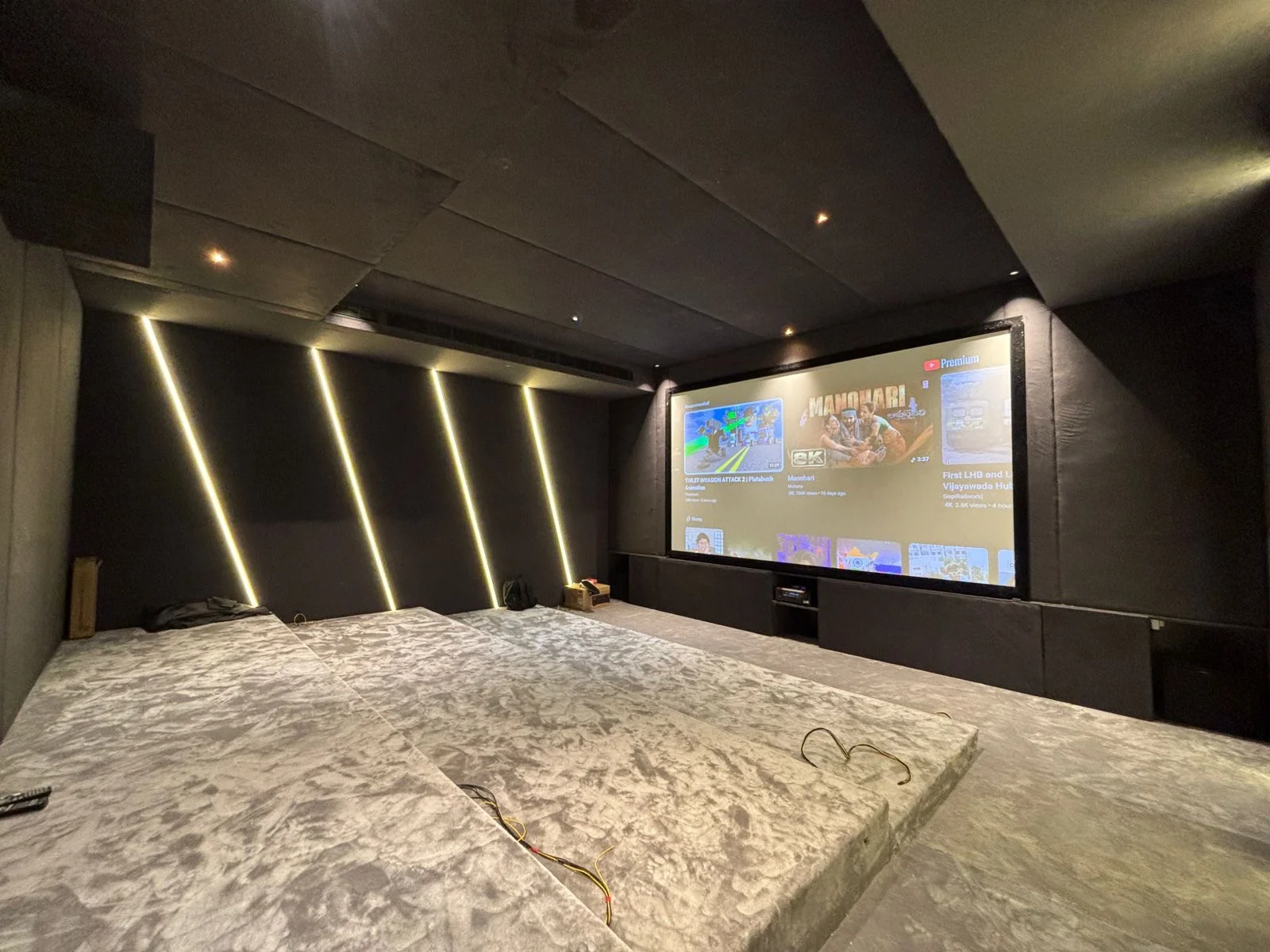
Acoustic treatment manages reflected sound inside a room. Sound isolation limits transmission into adjoining spaces. They require different construction decisions, so a panel quote should never be mistaken for a guaranteed soundproofing result.
01Diagnose the listening problem
Describe what you hear: unclear dialogue, harsh reflections, long decay or uneven bass between seats. Furniture, speaker placement and room boundaries all contribute. A photograph cannot establish an acoustic performance rating.
02Match the treatment to the job
Absorber depth, material, coverage and air gap affect performance. Thin decorative foam is not a universal solution for bass or transmission through walls. Ask for the actual assembly specification and appropriate fire-safety information.
Plan useful coverage around early reflections and other problem areas after checking speaker and seat positions. Preserve ventilation, access, door operation and the required clearances around fittings.
03Verify after installation
Use before/after measurements under comparable conditions when measurement is in scope. Recheck dialogue, bass consistency and listening comfort across the intended seats.
State the measured quantity and test conditions for any performance claim. Avoid promising a decibel reduction or reverberation target from a layer count alone.