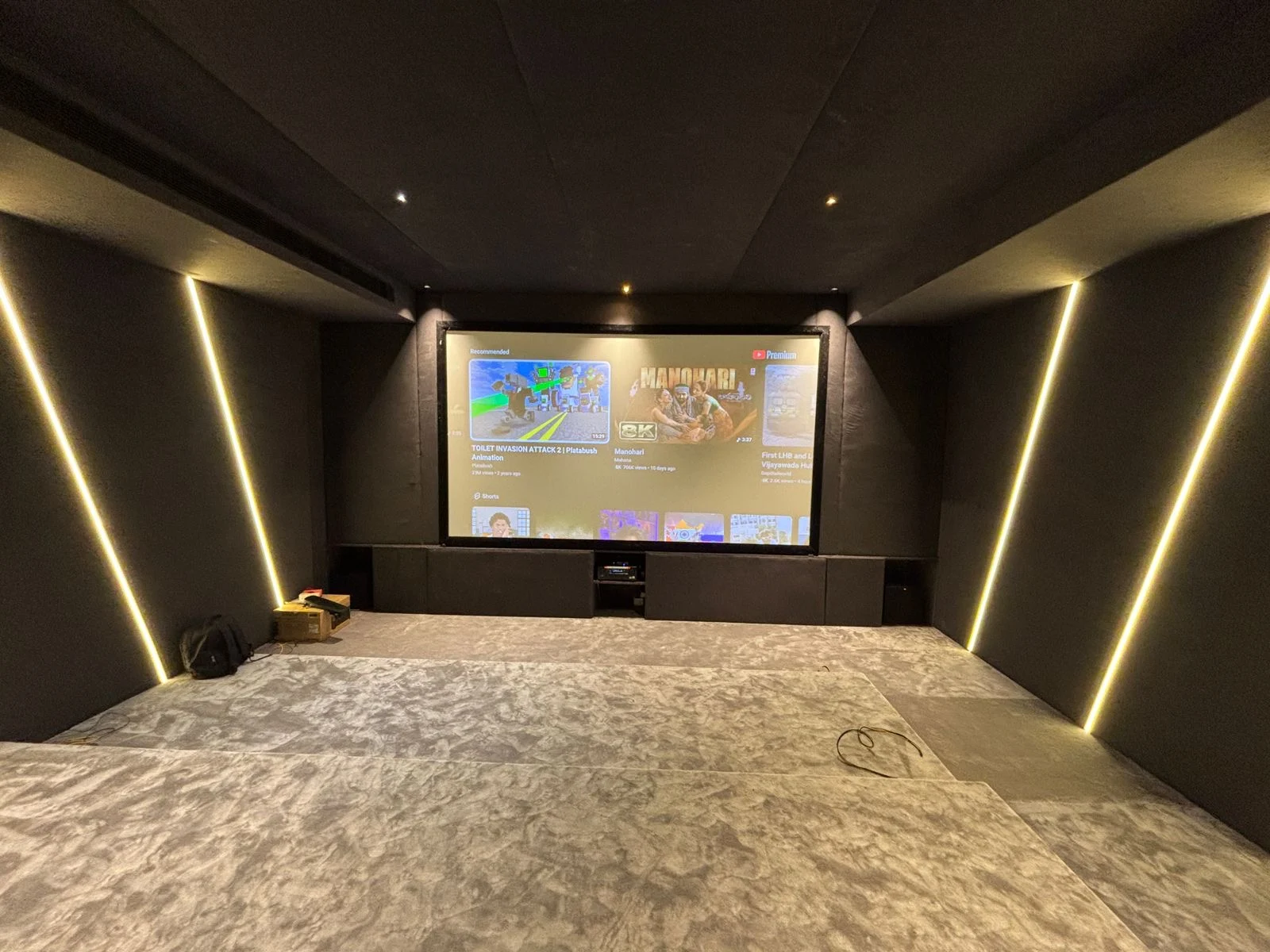
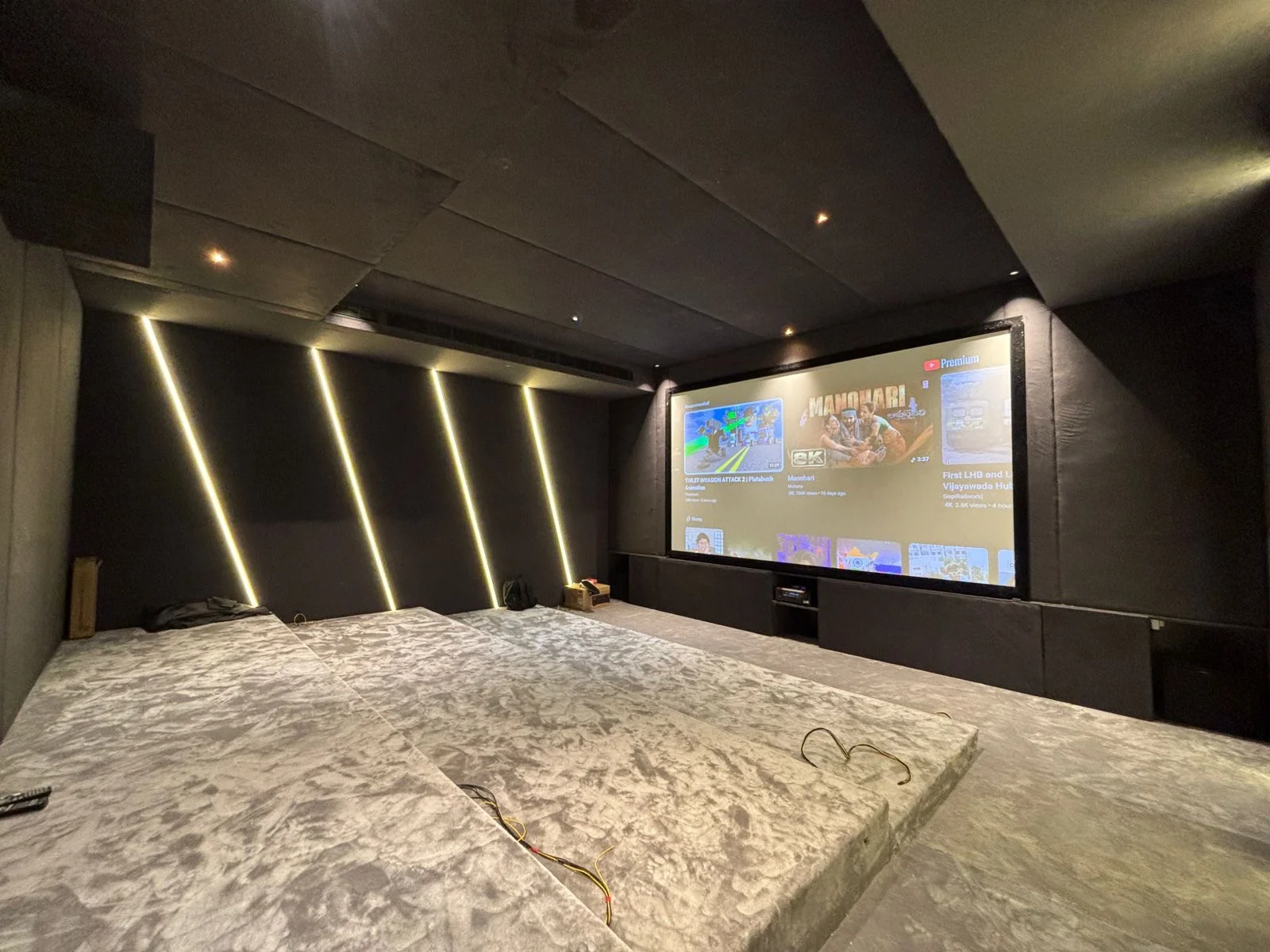
Dolby Atmos installation needs a compatible source, playback chain, speaker layout and correctly configured processor or AV receiver. More speaker labels on a box do not guarantee that the room has useful height effects.
01Read the channel numbers correctly
In a 5.1.2 layout, five refers to listener-level channels, one to the subwoofer channel and two to height or overhead channels. A 7.1.4 layout has seven listener-level channels and four height channels.
Check both processing capacity and powered amplifier channels. Some receivers process more channels than they can power internally, so the proposed layout may need an external amplifier.
02Ceiling speakers or upward-firing modules?
Direct overhead speakers require suitable ceiling positions, safe mounting and wiring access. Upward-firing modules depend on a usable reflection path and compatible ceiling conditions. They are different installation choices.
Use the official Dolby diagram for the exact layout. Position speakers relative to the listening seat and preserve separation between listener-level and height layers; do not simply spread ceiling speakers evenly.
03Configuration and listening checks
Label every cable, verify speaker polarity and channel assignment, enter measured distances and run the receiver’s supported setup procedure. Check crossover and subwoofer integration rather than assuming the defaults suit every speaker.
Use known compatible content and check the receiver’s input format. Test dialogue clarity, panning, overhead transitions and bass from the main seats, then save the configuration.